
How to Choose Hybrid Learning Furniture for Flexible Classrooms
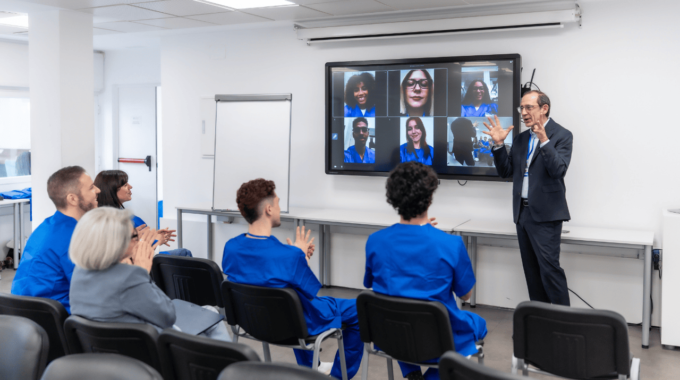
Today’s classrooms need to move quickly to meet the demands of the modern curriculum. The day might start with direct instruction but then move to group learning and hands-on tasks with quiet study later. Lessons are no longer static and without the right furniture, classroom flow is interrupted. Learning time gets reduced, and there’s more setting up than actual student engagement.
The right hybrid learning furniture keeps everything flowing seamlessly. A good mix of mobile desks, modular seating and agile layouts helps teachers reclaim valuable minutes between activities, reduce classroom noise and support calmer, more engaged students.
In this guide, we’ll show you how to choose adaptable furniture that makes flexible learning easy, so the classroom can shift gears without missing a beat.
What Hybrid Learning Means in Flexible Classrooms
‘Hybrid learning’ is used to describe classrooms that need to cope with different modes of learning throughout the day. When the room can be reconfigured for each mode quickly, you keep momentum and reduce dead time. The goal is to have the option to change to meet the demands of a lesson.
What Hybrid Learning Furniture Needs to Do
1) Enable fast transitions
The hidden cost of flexibility is transition time. If a changeover takes too long, you lose attention and end up spending your teaching minutes managing movement rather than learning.
- Make pairs: two students can turn and work without dragging furniture.
- Groups of four: Tables can join or students can cluster without blocking pathways.
- Back to independent work: students can return to a stable default quickly.
Time how long it takes your class to return to the default setup. If the furniture makes the reset blow out, it’s not helping you.
2) Support collaboration and focus
Flexible learning spaces help students spend more class time collaborating and interacting positively. The room should make it obvious where collaboration is welcome and where quiet, focused work is expected.
- Group tables: Collaboration and shared resources.
- Individual surfaces or separated seating: quiet work and assessment.
- Soft seating: Informal discussion, reading, and conferencing.
3) Protect sightlines and flow
Furniture should support movement and supervision. Walk a full loop around the learning zones while students are working. If you’re squeezing past chairs or stepping over bags, your furniture mix needs adjustment.
4) Make transitions easy with storage
In flexible classrooms, clutter gets in the way of a quick transition. Think of storage in terms of who is using it and how.
- Teacher-only: assessment materials, sharp tools, and items that interrupt lessons.
- Student-accessible: frequently used items students can collect and return.
- Mobile and flexible: resources that travel with stations and rotations.
The Core Classroom Furniture for Hybrid Learning
Flexible classroom tables
Tables determine how easily you can switch between whole-class and group tasks and stations.
- Can students move and join surfaces without scraping or loud dragging?
- Can you create groups without leaving students with awkward gaps or blocked pathways?
- Can you keep sightlines to key zones from most seats?
- Do rotations often? Prioritise tables that allow quick station set-ups.
- Does the class need calmer collaboration? Prioritise surfaces that group students without crowding.
Browse Abax Kingfisher’s modular classroom furniture.
Classroom seating
Flexible seating only helps when students understand expectations. In flexible learning spaces, students may have more autonomy to choose where to work, which can be positive.
- Anchor your room with chairs that suit most tasks.
- Add stools or soft seating tied to specific learning modes.
If you want to browse furniture for classroom use, see Abax Kingfisher’s classroom collection.
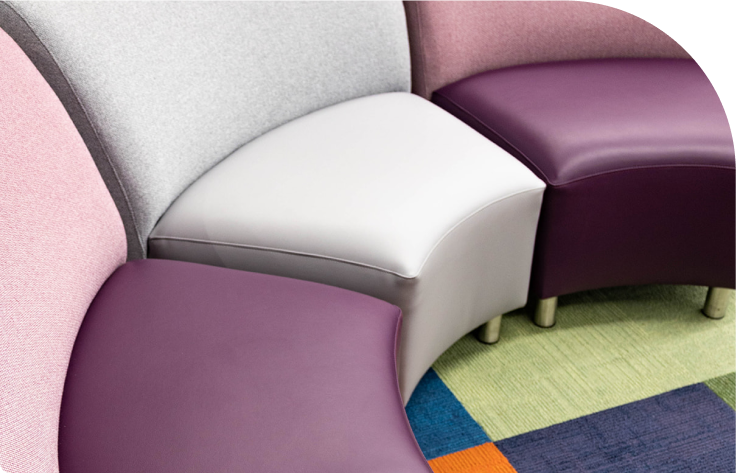
Soft seating and breakout pieces
Soft seating can be excellent for reading groups and low-stakes discussion. Place it where you can still supervise and where it doesn’t block movement. During a group activity, notice where voices lift first. If soft seating becomes a loud zone, adjust placement or reteach the zone expectations.
Storage
Storage impacts learning time. When students can access resources without queueing, your lesson keeps moving and you reduce low-level disruption.
- Can students access what they need without crossing the whole room?
- Can items be returned without a bottleneck?
- Is there a clear default home for common materials?
Focus and small-group options
Some students will do their best work with lower distraction and clearer boundaries. Flexible learning spaces can support choice, but that choice needs structure.
How to Choose Flexible Classroom Furniture
- Transition speed: Can you regroup the class in under 2 minutes?
- Stability: Does it feel safe and stable during normal use?
- Movement: Does it roll and move smoothly?
- Space recovery: Can you reclaim space when you need a different mode?
- Zone clarity: Does the furniture make zones visually obvious to students?
- Flow: Can you walk the circulation loop without bottlenecks?
- Storage integration: Does each zone have access to the resources it needs?
- Comfort match: Is the seating appropriate for the time students spend in that mode?
- Routine simplicity: Will students understand how to use it without constant reminders?
- Long-term use: Will it still work if your teaching program shifts next year?
Modular Classroom Furniture Planning Principles
Start with your common lesson moves
List the lesson moves you do weekly. Explicit teaching, partner tasks, group work, conferencing, rotations, independent practice. Then choose furniture that makes those moves faster and calmer.
Use zoning to teach behaviour expectations
Zoning is a teaching tool. When you name zones and teach what they look and sound like, you reduce negotiation and improve transitions. Flexible learning spaces can support student-centred learning, but that works best when expectations are explicit.
Make the reset visible and repeatable
A flexible room needs a default. Decide what reset looks like and make it repeatable so students don’t have to guess. When reset becomes a routine, flexibility becomes sustainable.
Budgeting and Staging Your Adaptable Classroom Furniture
You can improve flexibility in phases. Trial routines and make small adjustments before scaling across multiple rooms.
- Start with storage and declutter hotspots.
- Improve the main work surfaces so regrouping is easier.
- Add a small amount of purposeful seating variety.
- Expand modular options once your class routines are stable.
Abax Kingfisher Modern Classroom Furniture Solutions
Browse Abax Kingfisher’s modular classroom furniture today. Like a second set of eyes on what will work with your routines? Contact our team to discuss your needs and request a quote.
Related Posts